What should businesses do before a shop front window repair visit?
Before a shop front window repair visit, businesses should clear safe access to the damaged area, gather relevant site details and identify a contact who can assist the glazing team. Photographs, approximate measurements and information about the damage can also help GlassPlus UK assess the work more efficiently.
Businesses should prepare for a shop front window repair visit by confirming who has authority to approve the work, identifying site restrictions and putting suitable safety arrangements in place. Providing accurate information before the visit helps the glazing team understand the premises, plan the assessment and avoid preventable delays.
Confirm the responsible contact
Nominate a person who can meet the glazing team, provide access to relevant areas and answer practical questions about the premises. If the shop front is leased, the tenant should check whether the landlord, managing agent or property owner must approve an inspection or replacement before the appointment. It is also useful to establish who can authorise remedial work if the glass is found to be unsafe.
Where a facilities manager, security officer or building manager controls access, their details and any site procedures should be shared in advance. This is particularly important in multi-occupancy buildings where the shop front may form part of a wider entrance, reception area or managed façade.
Check the condition of the area
The damaged glazing should not be handled, taped, cleaned or temporarily removed by unqualified staff. Cracked, shattered or loose glass can present risks from sharp edges and falling fragments. Staff and members of the public should be kept away from the affected area until it has been assessed. If the damage affects a door, entrance or security line, the business should consider how people will enter and leave safely without obstructing the glazing team.
Any temporary boarding, barriers or protective measures already in place should be reported when arranging the visit. The glazing team can then take account of them during the assessment rather than finding unexpected restrictions on arrival.
Prepare site and access information
Before the visit, the business should check how the glazing team will reach the property and whether there are building-specific requirements. Relevant details may include:
- controlled entrances, reception procedures or security passes;
- loading restrictions, parking limitations and delivery access;
- staircases, lifts or narrow routes leading to the shop front;
- shared entrances or areas that require permission from another occupier;
- building rules relating to contractors, noise, waste or working near the public; and
- any access restrictions applying to listed, managed or multi-storey premises.
These points can affect how the repair is assessed and whether additional arrangements are needed. If the property has a building manager, the business should confirm any contractor induction or permit requirements before the visit.
Have useful records available
Existing information about the shop front can help establish what is being repaired and whether the damaged pane forms part of a larger system. Where available, the business should have access to previous repair records, installation details, drawings, maintenance reports or insurance correspondence. Records may also indicate whether the glazing is part of curtain walling, a framed shop front, an entrance door or another connected assembly.
The business should also note when the damage was discovered and whether it followed an impact, attempted break-in, accidental contact or another incident. This context can help distinguish the immediate glass repair from any associated damage to frames, beads, seals, locks, handles or surrounding finishes.
Consider operational and safety constraints
A shop front repair may affect trading, customer circulation, deliveries and neighbouring occupiers. The responsible contact should identify any sensitive areas, including tills, displays, stockrooms, reception desks and public walkways. If the work may need a section of the premises to be isolated, the business should decide in advance how staff and visitors will be directed around it.
Security arrangements should be explained clearly, especially where the damaged glazing is part of an entrance or forms a barrier to the premises. Alarm settings, access-control systems and keyholding procedures may need to be considered before work starts. The business should not assume that the glazing contractor can alter security systems or make good unrelated building finishes unless this has been agreed as part of the quotation.
Clarify the expected scope
Before the visit, it is sensible to list the areas the business believes require attention, while recognising that the final scope depends on the inspection. The assessment may need to consider whether only the pane is affected or whether the frame, setting blocks, seals, fixings or adjacent glass also require attention. If matching existing glazing is important, the business should explain this at the outset and identify any appearance, performance or security requirements.
For a commercial property, the repair may need to fit around other planned works or an insurance process. Relevant deadlines, claim references and approval requirements should be mentioned when arranging the visit, without assuming that a particular completion date can be offered before the condition has been assessed.
Ask what happens after the assessment
A professional visit should establish the condition of the shop front, the appropriate repair or replacement approach and any practical constraints affecting the work. The business should ask what information will be included in the quotation, whether associated frame or hardware defects will be identified and what preparation is expected before installation.
It should also confirm how the completed work will be checked, what documentation will be provided and whether any follow-on work by another trade may be necessary. GlassPlus UK works to current building and safety regulations, so compliance considerations should form part of the discussion where the glazing affects access, security or the wider building envelope.
GlassPlus UK brings over 30 years of industry experience to commercial glazing repairs. Its established assessment process is intended to give businesses a clear understanding of the work required, the relevant site considerations and the next steps before a shop front window repair proceeds.
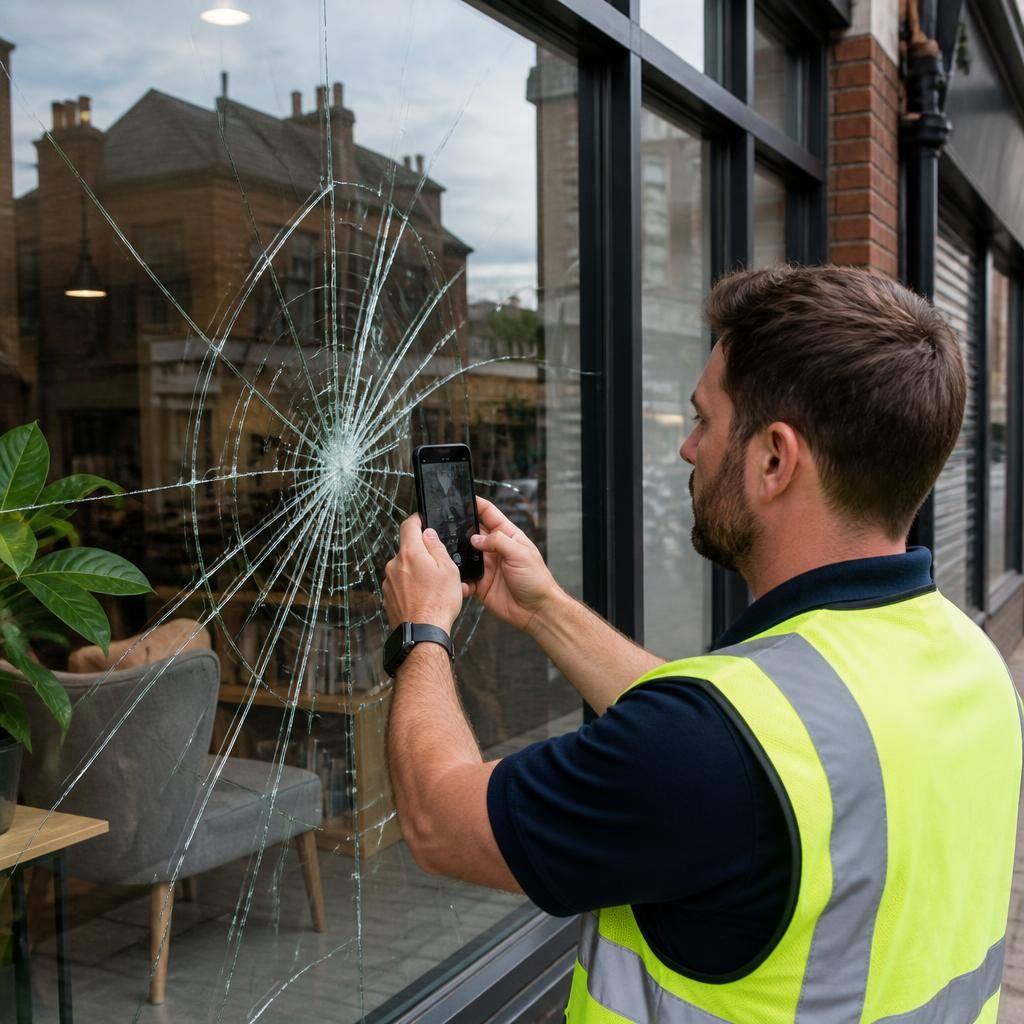
Clear photographs can give the glazing team useful context before attending. Take them from a safe position without approaching loose or shattered glass, including one wider image of the shop front and closer views of the affected pane, frame and surrounding area.
Images should show the damage as it was found rather than after cleaning or attempted repair. Send them with the property address, the position of the affected glazing and any known access restrictions. This helps distinguish damage to the glass from possible issues with the frame or adjacent fittings, while allowing the visit to be planned around the actual shop front layout.