
When is shop front window repair unsuitable?
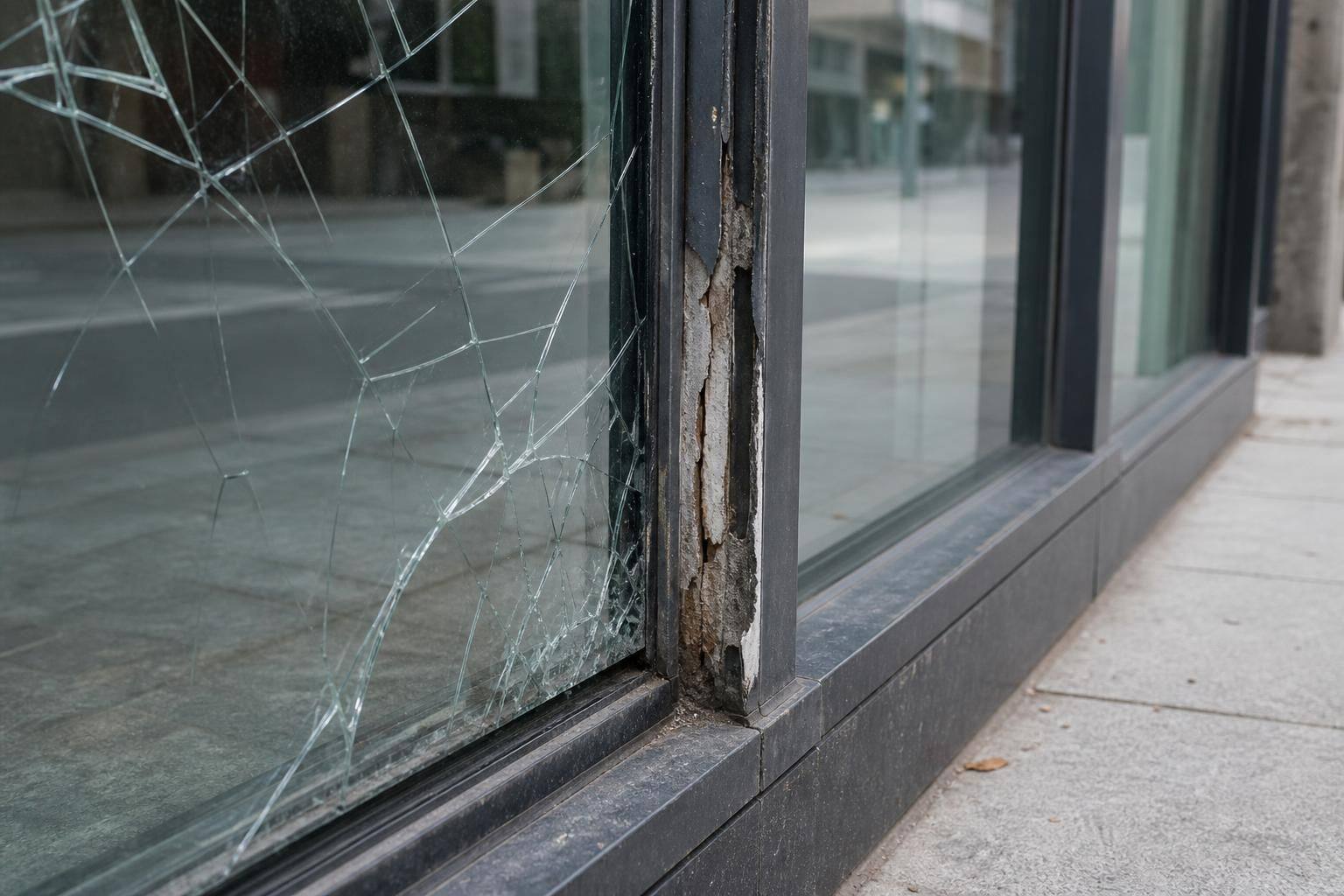
Shop front window repair is generally unsuitable where damage is extensive, the glass has lost its structural integrity, or the surrounding frame and fixings are compromised. In these cases, replacement or wider remedial glazing may provide a safer, compliant solution, subject to a site assessment.
Shop front window repair is unsuitable when the proposed work would leave the glazing unsafe, insecure, non-compliant or unable to perform its intended function. A proper assessment should therefore consider more than the visible mark or break. It should establish the condition of the glass, the frame, the beads, gaskets, fixings and the surrounding structure before repair is recommended.
Replacement is usually the more appropriate option in the following circumstances:
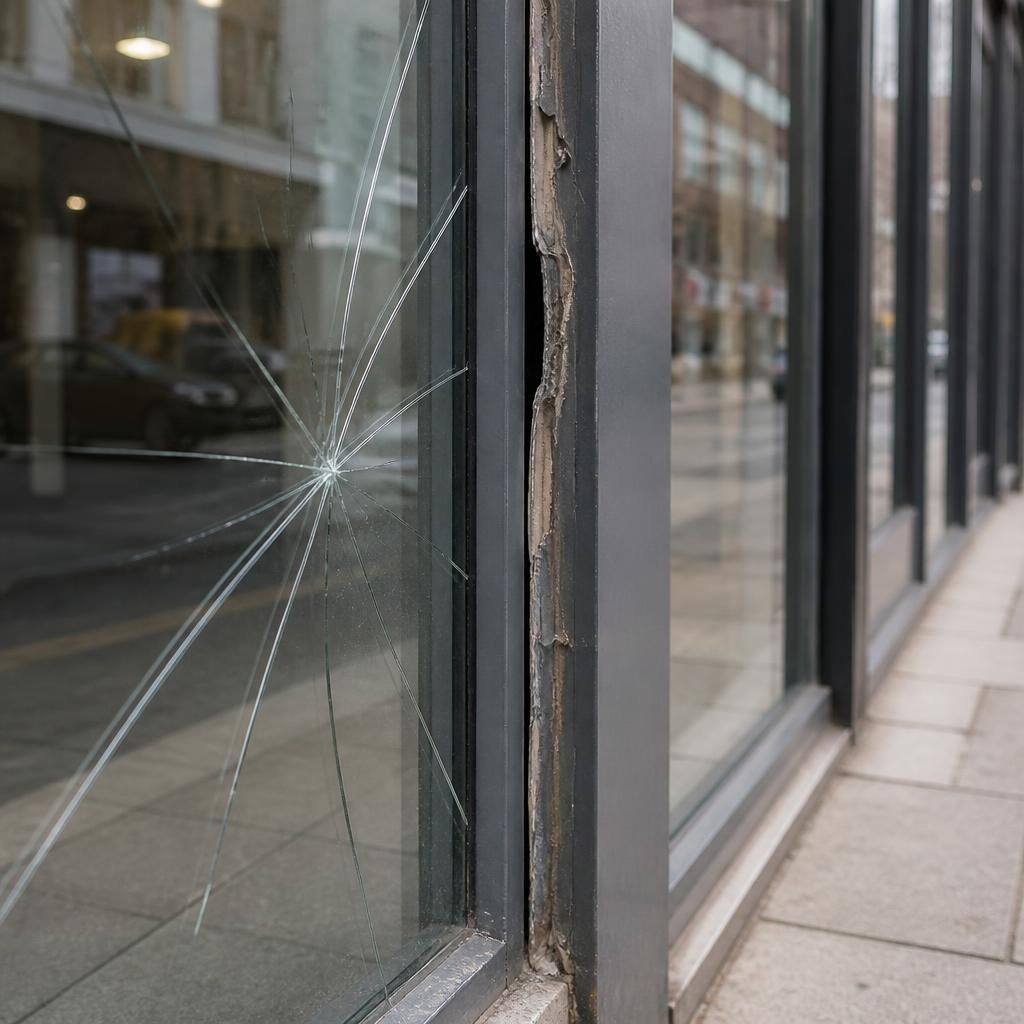
- The pane is cracked, holed or shattered. Glass that has fractured cannot normally be restored to its original strength by filling or surface treatment. A broken pane may also have sharp edges, reduced security and a greater risk of further failure.
- The glass is part of a sealed unit. Condensation between panes, a failed seal or visible misting indicates that the insulating unit has deteriorated. Treating the surface will not restore the seal or the unit’s thermal and acoustic performance.
- There is damage at the edge of the glass. Chips and fractures near an edge can be more significant than similar damage in the centre of a pane because they may continue into the glass or affect how it is supported by the frame.
- The glass type is no longer suitable. A replacement may be needed where the existing pane does not provide the required safety, security, privacy, insulation or solar-control performance. The replacement specification must be compatible with the opening and its use.
- The glazing system has failed around the pane. Deteriorated gaskets, loose beads, failed sealant or corroded fixings can allow movement and water ingress. Replacing only the glass may not resolve the underlying problem.
- The damage keeps recurring. Repeated breakage may point to movement in the frame, impact exposure, building movement, poor support or an unsuitable installation detail. In that situation, replacing a pane without addressing the cause is unlikely to be a durable solution.
Repair may also be unsuitable where the proposed method is cosmetic rather than structural. Polishing, filling or treating a mark can sometimes improve appearance, but it should not be presented as a substitute for replacement where the glass has lost its safety or security function. The same principle applies to temporary boarding or protective measures: these can help control immediate risk, but they do not constitute a completed glazing repair.
Access and the surrounding shop front should be considered as well. A pane may be difficult to remove safely if it is large, positioned above an entrance, retained by a damaged system or located where customers and staff remain close to the work area. If the opening cannot be made safe during the work, a wider section of the glazing system may need attention rather than an isolated pane replacement.
Regulatory requirements are another reason to reject an unsuitable repair approach. The replacement glass, safety markings, visibility features, fixings and installation method should be appropriate for the building and its use, and the completed work should comply with current building and safety regulations. Matching the appearance of the existing shop front is important, but visual similarity should not take priority over the required performance of the glazing.
A commercial glazing contractor should explain the reason for recommending repair, replacement or wider remedial work. The assessment should record the dimensions and position of the opening, the apparent glass construction, the condition of the retention system and any evidence of water ingress or movement. It should also identify whether the business needs to maintain security, customer access or a consistent appearance across adjoining panes.
For a business comparing quotations, the most useful proposal is not necessarily the one offering the narrowest repair. It is the one that separates immediate safety measures from the permanent solution, identifies any associated defects and sets out the proposed glass and installation method clearly. GlassPlus UK provides commercial glazing repair and replacement services for shop fronts, windows and related glazing systems, with work undertaken in line with current building and safety requirements.
An isolated shop front window repair may also be unsuitable where it would leave a visibly inconsistent elevation. Differences in tint, reflection, thickness or surface condition can make a new pane stand out from adjoining glazing, particularly on a prominent commercial frontage. If the appearance cannot be matched without addressing neighbouring panes or sections of the system, a wider replacement may offer the more practical long-term outcome.
This should be weighed alongside the condition and function of the glazing, rather than treated as a purely cosmetic preference. A commercial glazing assessment can distinguish between an acceptable like-for-like solution and a repair that would leave the frontage looking uneven or require further work shortly afterwards.
Discuss Your Shop Front Window Repair Options
Businesses unsure whether a shop front window repair is suitable can contact GlassPlus UK to discuss the damage and arrange a professional assessment. The team can explain whether repair, replacement or wider remedial glazing is the most appropriate option for the property.