
What affects the cost of commercial glazing repairs?
The cost of commercial glazing repairs is influenced by the type and size of glass, the extent of the damage, site access, the surrounding frame or system, and whether specialist equipment or urgent attendance is required. A proper inspection helps establish the most suitable repair method and provide an accurate quotation.
Commercial glazing repair costs are shaped by the complete scope of work rather than the damaged pane alone. The final quotation usually reflects the required glass specification, the condition of associated components, the work involved in making the area safe and complete, and any coordination needed with the property or facilities team. An inspection is therefore important before a reliable price can be given.
The glass specification can have a significant bearing on cost. Standard clear glazing is only one possibility. A repair may require toughened, laminated, patterned, fire-resistant, solar-control or otherwise performance-rated glass, depending on the building, its use and the position of the pane. Thickness, colour, coatings and the need to match adjoining glazing may also affect procurement and installation requirements. Where safety glazing is necessary, the suitable specification must take priority over selecting the lowest-cost option.
The condition of the surrounding installation is also relevant. A broken pane may be held within a shop front, commercial window, curtain walling system or door assembly that has suffered distortion, failed seals, damaged beads or weakened fixings. If these elements can remain serviceable, the work may be limited to glazing. If they have also been affected, additional component replacement or adjustment may be needed to produce a secure and weather-resistant result.
How the repair is carried out can alter the labour involved. Some installations allow straightforward removal and refitting, while others require careful dismantling of beads, pressure plates, gaskets or internal trims. Large or awkward panes may need a controlled handling method and suitable lifting equipment. The condition of the opening, the need to protect surrounding finishes and the distance between the working area and access point can all influence the time and resources required.
Site arrangements and risk controls form part of the assessment for a commercial property. Restricted loading areas, occupied offices, public-facing premises, security requirements and work at height may require additional planning. Hoarding, exclusion zones, protective sheeting or liaison with building management may be necessary, particularly where the repair is close to staff, visitors or valuable equipment. These measures are intended to keep the work controlled and minimise disruption to normal operations.
Making good and finishing work should be considered separately from fitting the replacement glass. Depending on the damage, the quotation may need to account for removing residual glass, clearing defective sealant, renewing gaskets, resealing joints, adjusting adjacent sections and disposing of damaged materials. If the surrounding frame or finish has been marked, further remedial work may be needed to leave the installation presentable.
Urgency and availability of matching materials can affect the cost of a particular repair. A non-standard specification may require additional sourcing, while urgent attendance can involve different labour planning and equipment arrangements. Where a temporary measure is appropriate, it may be assessed as an interim step rather than treated as the completed repair. The most suitable option depends on the security, safety and operational needs of the premises.
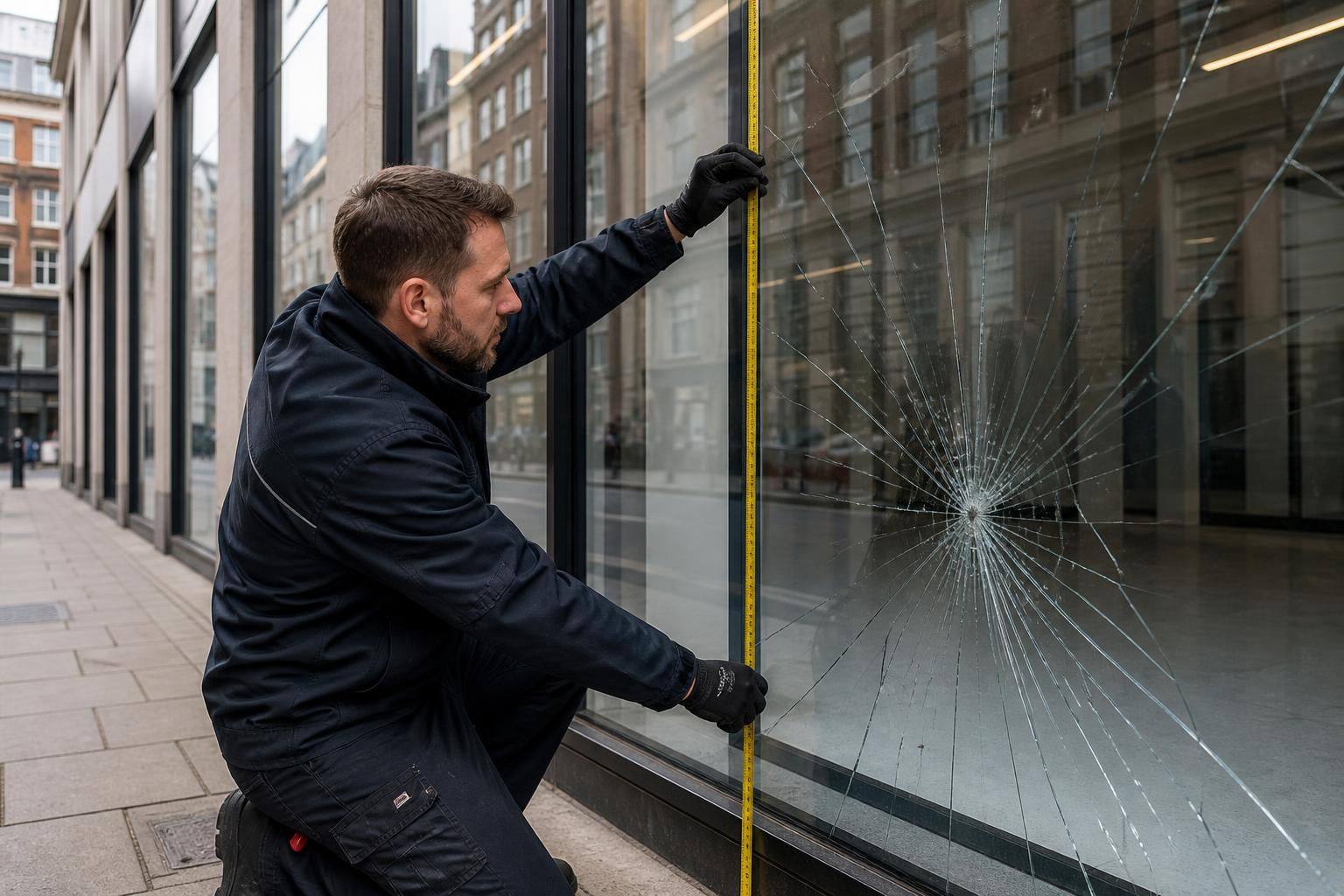
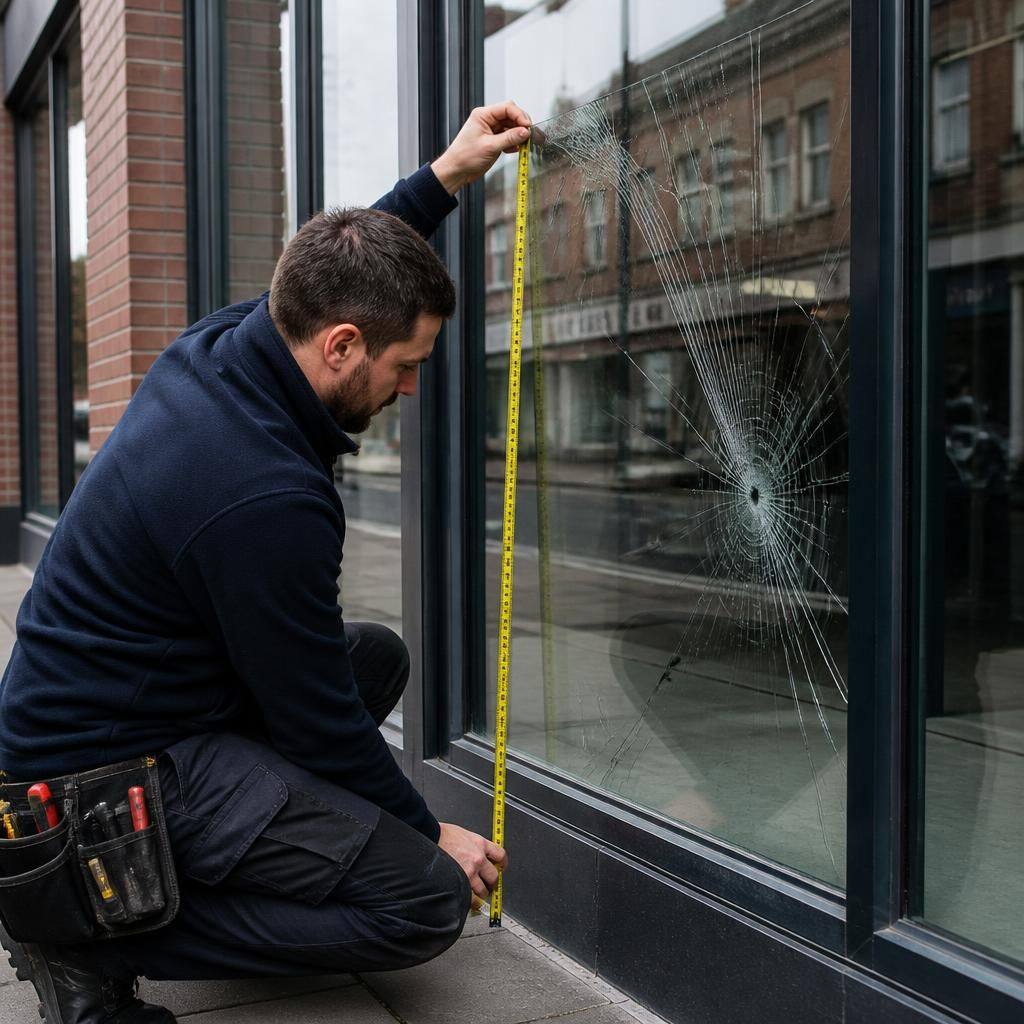
During an inspection, GlassPlus UK can establish whether the issue is limited to the glazing or extends to the frame and fixing system. The assessment should record the dimensions, specification, access conditions, visible defects and any compliance considerations. This gives the client a clearer breakdown of the proposed work and helps distinguish necessary elements from optional improvements.
Businesses comparing quotations should check that each one covers the same specification and scope. Important points include the type of glass, treatment of the existing frame, access arrangements, removal of damaged material, making good, safety requirements and any temporary protection. A lower initial price may not represent better value if essential parts of the work have been excluded. GlassPlus UK carries out commercial glazing repairs in line with current building and safety regulations, helping clients assess cost alongside the required standard of work.
The cost can also depend on whether the proposed work preserves the existing glazing system or requires a more extensive alteration. A compatible repair may involve replacing only the affected element, whereas a damaged or obsolete arrangement may require further investigation before a suitable method can be confirmed. This distinction is particularly relevant where adjoining panels, drainage paths or ventilation features form part of the original design.
For that reason, a quotation should explain the basis of the recommended approach rather than present a glass price in isolation. GlassPlus UK can assess the installation as a functioning system and identify whether the proposed work is intended as a local repair or part of a wider remedial solution. This gives the client a clearer understanding of what the cost covers before the work is authorised.
Discuss the cost of your commercial glazing repair
Businesses seeking a clearer understanding of the likely repair cost can contact GlassPlus UK to discuss the affected installation and arrange an assessment. Providing details of the damage, location and access conditions will help inform the quotation process.