
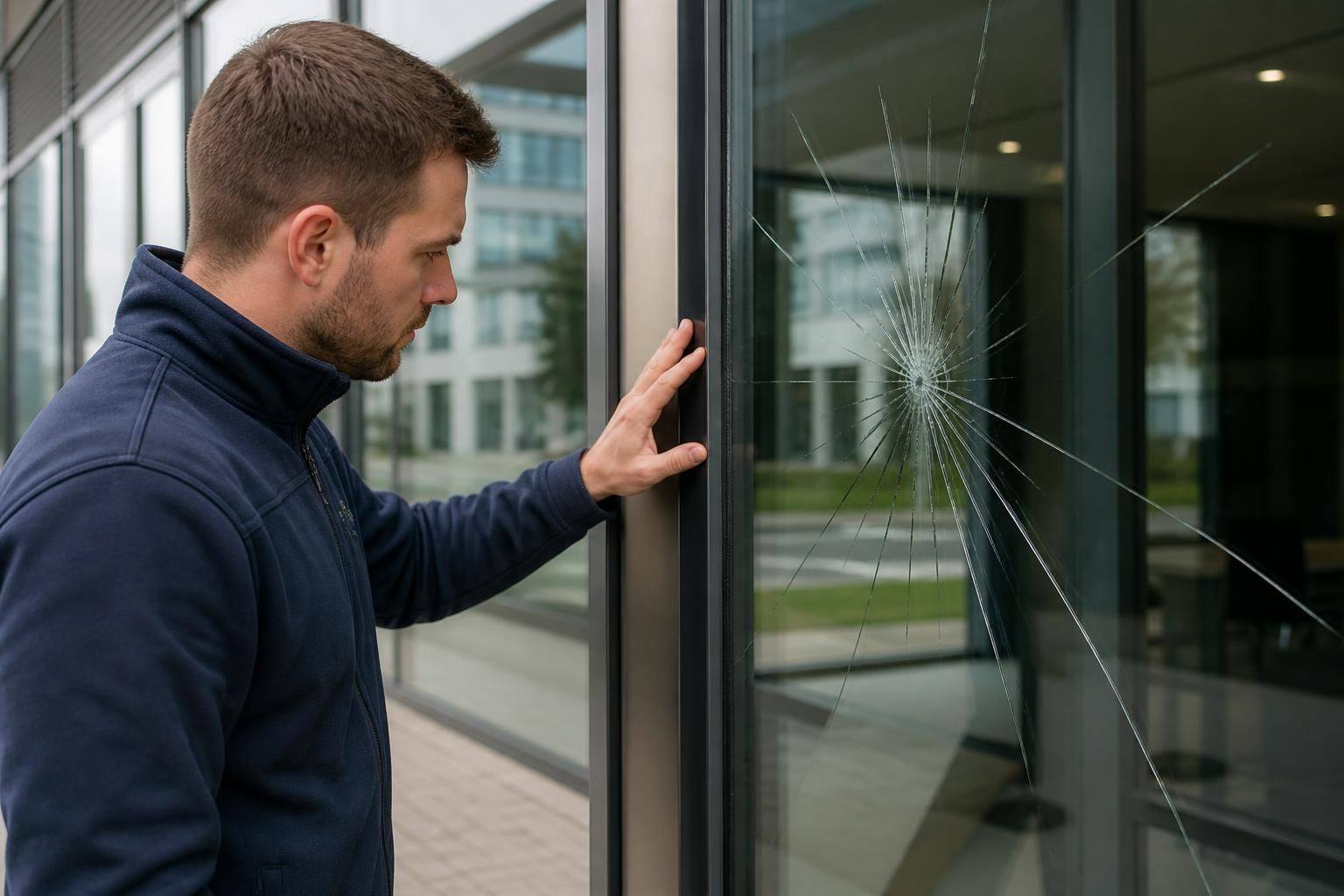
When can commercial glazing be repaired rather than replaced?
Commercial glazing can often be repaired when the damage is localised and the surrounding frame, seals and supporting structure remain sound. Replacement is generally necessary where the glass is structurally compromised, damage is extensive, or a repair cannot restore the required safety and performance.
Commercial glazing can be repaired where the underlying system remains suitable and the required safety and performance can be restored without replacing the complete installation. The decision depends on the type and location of the damage, the condition of the frame and fittings, and whether the glazing can continue to meet the requirements of the building.
A repair may be appropriate where the problem is confined to a replaceable or serviceable component. This can include failed gaskets, worn seals, damaged beads, defective handles, loose fittings and certain issues affecting the frame or surrounding seals. In these cases, the glass may remain serviceable and replacing the affected component can resolve the problem without disturbing the whole window, shop front or curtain walling system.
Sealed units provide another common example. If an insulated unit has misted because its edge seal has failed, the frame may still be in good condition. Replacing the individual sealed unit can restore the appearance and insulating performance while retaining the existing frame. This is different from replacing the complete window or façade section, which may not be necessary if the supporting structure is sound.
Minor surface damage may sometimes be assessed for specialist repair, but this depends on its depth, position and effect on visibility. Damage close to an edge, within a critical sightline or in a location exposed to impact may make replacement the more suitable option. Any repair must leave the glazing safe for its intended use and must not conceal a defect that could worsen over time.
Replacement is normally required where the glass is cracked, broken or structurally weakened. Toughened and laminated safety glass cannot simply be restored to its original safety properties after significant damage. A pane may also need replacing where it no longer provides the required level of safety, security, acoustic control, solar control, insulation or fire performance. The same applies where damage is widespread or where the glass is incompatible with the existing system.
The surrounding frame is an important part of the assessment. Corrosion, distortion, water ingress, failed drainage or movement in the structure can indicate that changing the glass alone will not provide a durable solution. If the frame and fixing points remain stable, an individual pane or component may be replaced. If the frame has deteriorated or the system cannot securely support new glazing, more extensive work may be necessary.
Commercial premises also require attention to the way repairs affect daily operations. The assessment considers access, the position of the glazing, the risk to staff and visitors, and whether the work can be completed in manageable stages. Shop fronts, office windows and curtain walling may each require different access and protection arrangements, particularly where glazing is above entrances or beside busy circulation routes.
An inspection should therefore establish:
- what caused the damage and whether it is continuing;
- whether the defect affects the glass, frame, seals, fittings or supporting structure;
- the type, thickness and safety classification of the existing glazing;
- whether replacement components can be correctly matched to the installation;
- how the proposed work will affect safety, weather resistance and building performance; and
- whether the completed work can comply with current building and safety regulations.
Following this assessment, the recommended solution may be a component repair, an individual glass replacement or a wider section replacement. The aim is to avoid unnecessary work while ensuring that the finished installation is safe, suitable for its setting and capable of performing as required. GlassPlus UK can advise commercial clients on the practical distinction between these options as part of its glazing inspection and quotation process.
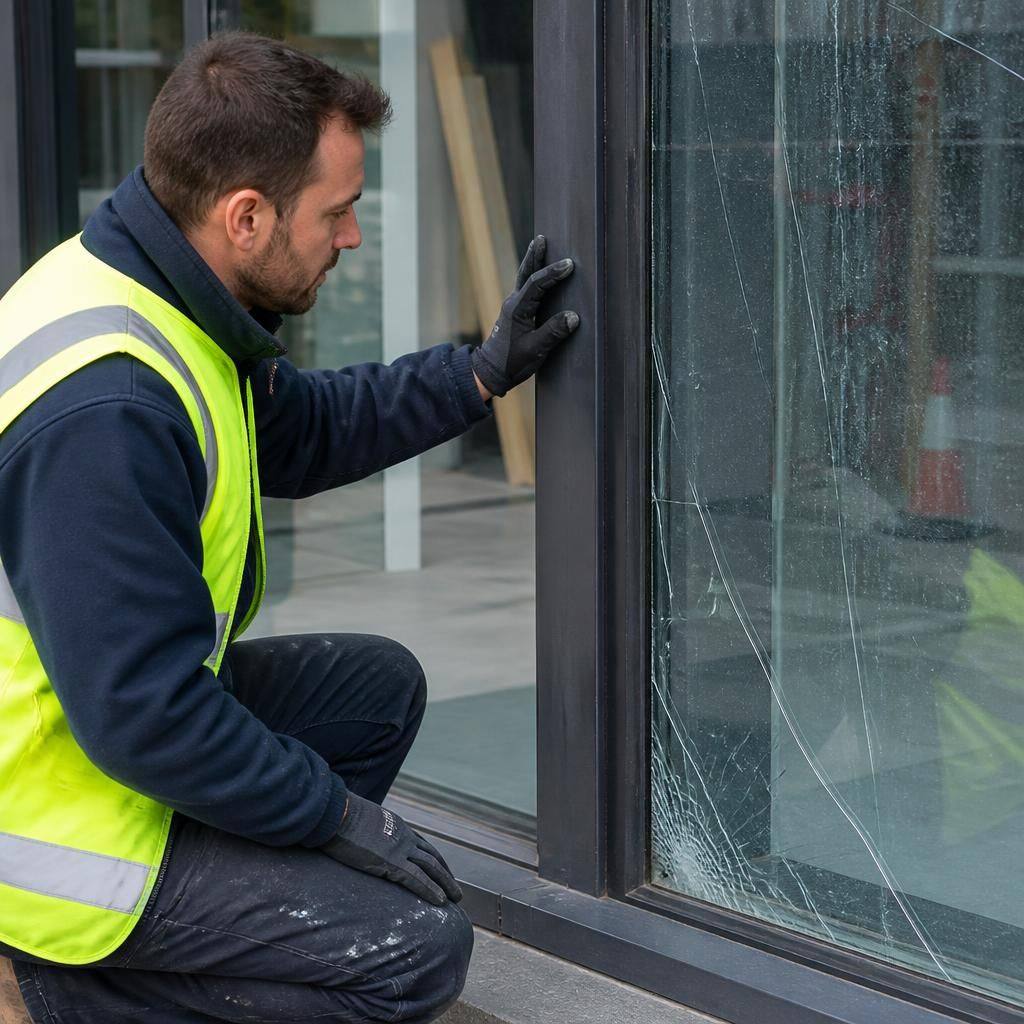
Where damaged glazing presents an immediate hazard, making the area safe may need to come before deciding whether the pane can be repaired or should be replaced. Temporary protection can control access and reduce the risk of further damage while the glazing, frame and surrounding installation are assessed properly.
This interim step should not be treated as evidence that the original glass is suitable for repair. The final recommendation must be based on the condition and specification of the installation, with any temporary measure replaced by a permanent solution that is suitable for the building and its use.