How are commercial glazing repairs planned for occupied premises?
Commercial glazing repairs for occupied premises are planned around the building’s access requirements, daily activities and safety controls. GlassPlus UK assesses the affected glazing, agrees a practical work plan with the responsible contact and carries out the repair or replacement with disruption kept to a minimum.
Commercial glazing repairs in occupied premises are planned by coordinating the technical work with the building’s operational, access and safety requirements. The aim is to establish a controlled sequence before work begins, so occupants, visitors and other contractors understand what will happen and the affected area can be managed appropriately.
The planning process normally begins with information about the damaged glazing, its location and the circumstances of the repair. Details such as the type of building, access restrictions, trading or office activity, security arrangements and any known hazards help determine the most suitable approach. Photographs or an initial description can assist with early guidance, but the final method depends on the condition and position of the installation.
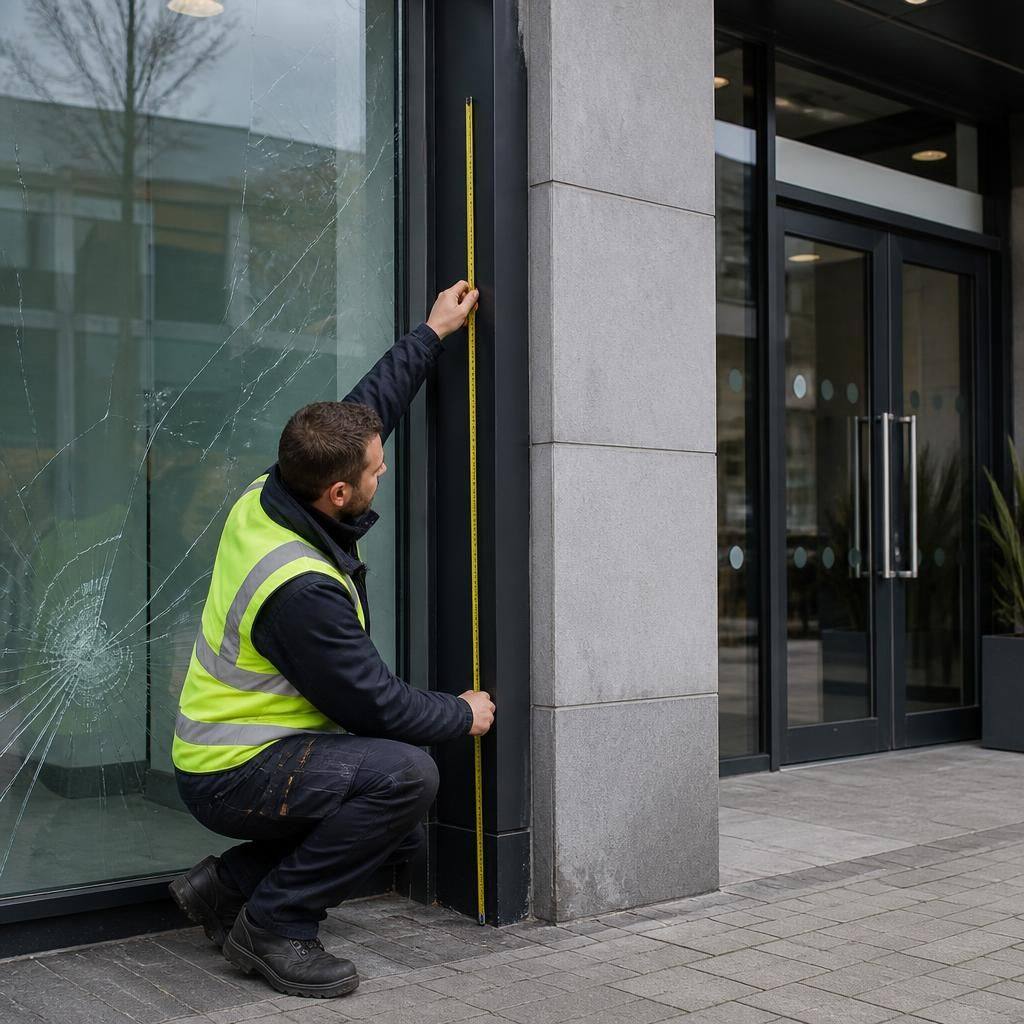
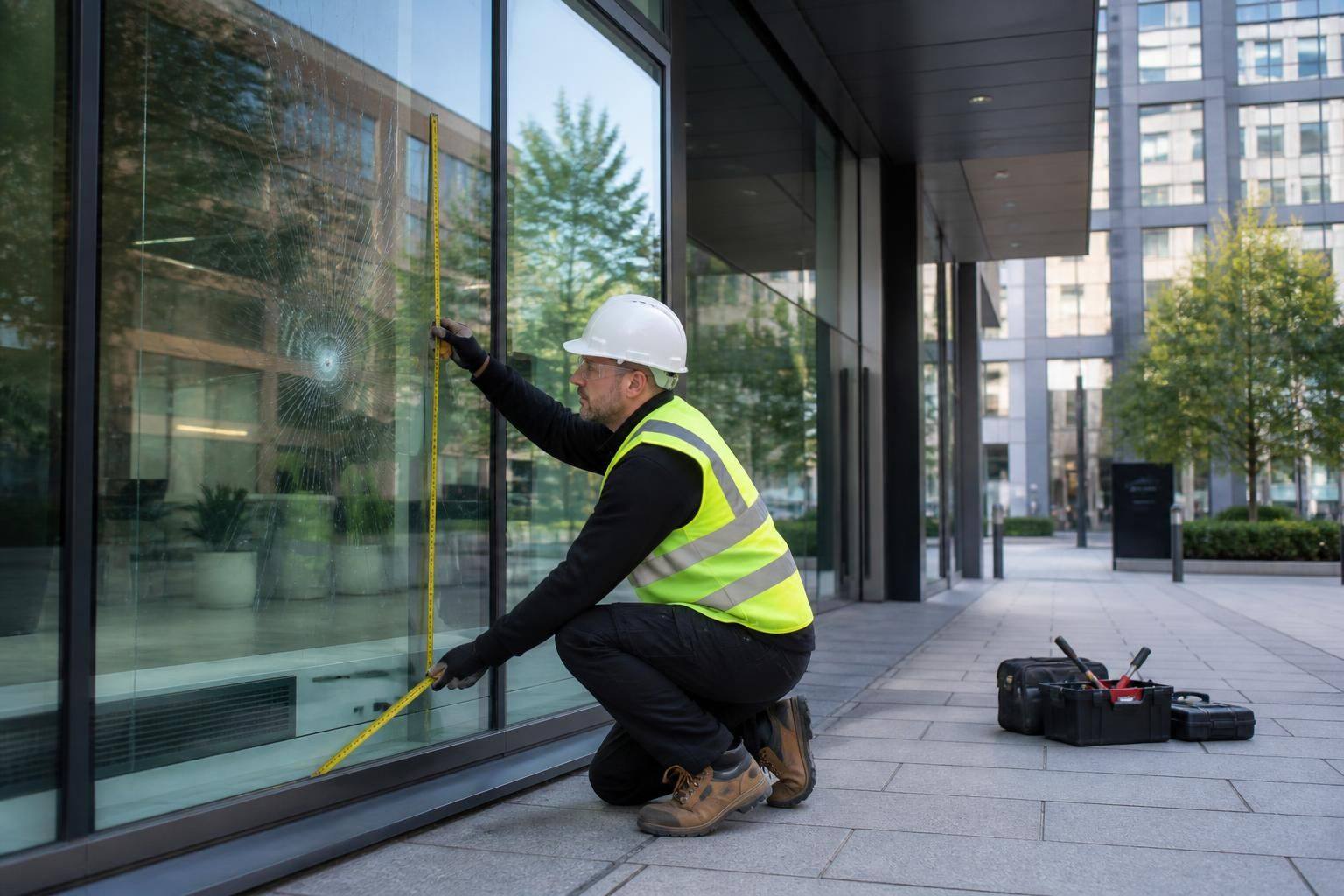
A site assessment is used to confirm the extent of the damage and identify practical constraints. This may include checking the surrounding frame, curtain walling or shop front, measuring the opening, examining how the glass is retained and considering access for personnel, tools and replacement materials. The assessment also helps establish whether the glazing can be repaired or whether a controlled replacement is required.
Safety planning is particularly important where people continue to use the premises. The work area may need to be segregated, with suitable arrangements for preventing contact with broken glass, tools and removed materials. The planned controls take account of pedestrian movement, entrances, circulation routes, nearby workstations, displays and areas used by customers or staff. Where access cannot be maintained safely, the responsible contact can agree how that part of the premises will be managed while the work is under way.
For larger or more involved repairs, the work can be organised in stages. A sequence may cover making the damaged area safe, preparing the opening, removing defective components, installing the replacement and completing checks. Staging can be useful in a busy commercial environment because it gives the building’s responsible person a clearer view of when particular areas will be affected and allows related site activities to be coordinated.
Access arrangements are agreed in advance wherever possible. These may include a designated entrance, loading or parking instructions, security procedures, lift access, restrictions on noisy activities and the position of equipment. If specialist access equipment or additional protection is needed, its use must be considered alongside the building layout and the safety of people nearby.
Communication forms an important part of the plan. GlassPlus UK liaises with the responsible contact about the proposed scope, the areas affected and any site rules that apply. The building’s facilities, property or health and safety representative can then brief occupants and arrange any internal controls required. Clear communication is also valuable when a repair involves shared access, a tenant area or a public-facing shop front.
Materials and finishing requirements are checked before the repair is scheduled. The replacement must be suitable for the existing installation and the intended commercial setting, while any associated seals, beads, panels or frame components need to be considered as part of the overall repair. This reduces the risk of discovering an avoidable mismatch once the work has started.
Planning also includes consideration of the condition of the surrounding installation. Damage may affect more than the visible pane, particularly where impact has distorted a frame or disturbed adjacent components. Identifying those issues early helps ensure that the agreed scope reflects the work required and that any change in condition can be discussed with the responsible contact before proceeding.
Before completion, the repaired area is checked for secure installation, suitable operation where relevant and an appropriate finish. Removed glass and other waste are cleared in accordance with the site arrangements, and the responsible contact can be informed of any points requiring attention. This closing stage helps return the area to normal use in a controlled manner while maintaining the standards expected in a commercial property.
By combining a site-specific assessment, risk controls, access planning and communication with the building’s representative, GlassPlus UK can organise commercial glazing repairs around the realities of an occupied premises. Its work is carried out with regard to current building and safety regulations, supporting a practical and compliant repair plan for businesses.
A clear decision-making process is an important part of planning glazing repairs in an occupied commercial building. The responsible contact should confirm who can approve access arrangements, changes to the agreed scope and any temporary restriction on using the affected area. This is particularly useful where the visible damage does not show the full condition of the frame or surrounding installation.
Agreeing these responsibilities before work starts helps the glazing team and building representative deal with findings in a controlled way. It also ensures that any change is considered against the building’s operational needs, safety requirements and the condition of the installation, rather than being decided informally while occupants are nearby.