
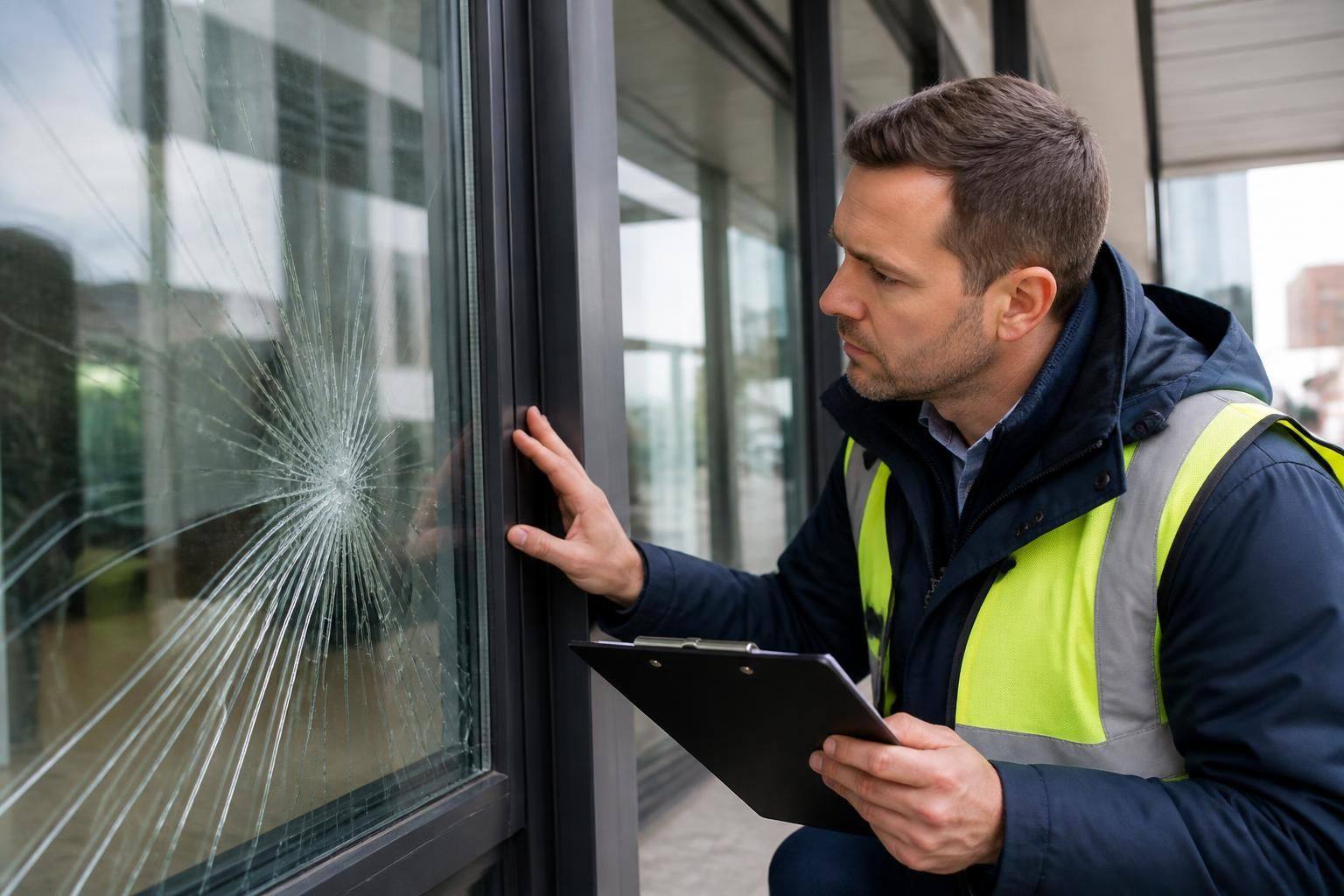
What does a commercial glazing repair assessment involve?
A commercial glazing repair assessment involves inspecting the damaged glass, surrounding frame and installation to establish the cause and extent of the problem. The findings are then used to recommend a suitable repair or replacement approach, taking safety, compliance, access and the building’s day-to-day use into account.
A commercial glazing repair assessment is a structured site review that turns an initial report of damage into a defined scope of work. It gives the property owner, facilities manager or contractor a clearer basis for deciding whether the installation can be restored, requires part replacement or needs more extensive remedial work.
The assessment usually begins with a review of the reported issue and the circumstances surrounding it. This can include impact damage, attempted entry, accidental breakage, water penetration, seal failure, movement in the frame or a problem that has developed over time. Understanding the likely cause helps distinguish an isolated pane failure from a wider issue affecting the glazing system.
The inspection considers more than the visible crack or break. The assessor examines relevant features such as:
- the pattern, position and severity of the damage;
- the type and apparent specification of the glass;
- glazing beads, gaskets, seals and setting blocks;
- the condition, alignment and operation of the frame;
- signs of movement, corrosion, water ingress or failed sealant; and
- nearby panels or connected sections that could be affected by the same fault.
Where the glazing forms part of a curtain walling system or shop front, the assessment also considers how individual components are connected. A damaged pane may not be the only item requiring attention if the surrounding pressure plates, caps, mullions, transoms or fixings have been disturbed. Identifying these details helps prevent a narrow repair that leaves the underlying problem unresolved.
Measurements and site information are gathered to establish the practical requirements for the proposed work. This may include the approximate pane dimensions, glass build-up, frame arrangement, floor level, access route and space available for handling materials. Existing markings, drawings or maintenance records can assist with identifying the original specification, although the installed condition remains important when determining the appropriate solution.
Safety is assessed at the point of inspection. The assessor looks at whether broken or unstable material presents a risk to employees, visitors, members of the public or neighbouring areas. The review may also identify the need for controlled access, protection of work areas, removal of loose fragments or temporary measures before permanent work takes place. Any recommendation is considered in the context of current building and safety regulations.
For occupied commercial premises, the assessment takes account of how the work could interact with normal operations. The location of the damaged glazing, access through the building, customer or staff circulation, security arrangements and the need to protect internal finishes can all influence the proposed method. These considerations help inform planning without assuming that every installation can be approached in the same way.
The outcome should provide a clear record of the observed condition and the work that may be required. Depending on the installation, this can include:
- a description of the damaged or defective components;
- the likely cause or contributing factors;
- the recommended repair, replacement or further investigation;
- the relevant glass and framing requirements;
- access, handling and site protection considerations;
- any limitations identified during the inspection; and
- the information needed to prepare a quotation and method of work.
An assessment is therefore distinct from simply measuring a replacement pane. It provides the technical and practical context needed to select a suitable course of action, reduce avoidable disruption and ensure that the proposed glazing work is properly considered before it is carried out. GlassPlus UK applies its commercial glazing experience to this process for businesses across London and surrounding areas.

A useful assessment creates a shared reference point for everyone involved in the building. Where appropriate, photographs, measurements and annotated notes can show the condition of the glazing at the time of inspection, helping property managers and contractors understand the recommendation without relying solely on a verbal description.
This record can also separate confirmed findings from matters that require further checking. That distinction is important where parts of the installation are concealed or cannot be examined fully during the initial visit, allowing the proposed work to be reviewed and refined on a properly informed basis.